“What’s that loud noise in my headset?”
Even if your headset and/or interphone system is prone to that kind of thing, the correct reaction should never be, "It's probably nothing, don't worry about it."
— James Albright
Updated:
2026-03-01
I digress before I even start . . .

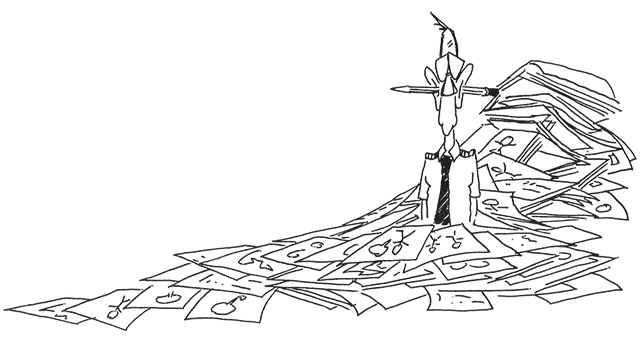
An AI depiction of where not to wear your headset
When I was in Air Force pilot training we were told about a solo student gear up landing in a Cessna T-37B trainer. It was at one of our auxiliary fields where we had a Runway Supervisory Unit (RSU) with an Instructor Pilot (IP) to keep an eye on things. Of particular note: the Air Force required a “gear down” call over the radio. We didn’t need clearance to land at these aux fields, but we still had to make the gear down call.
The IP was supposed to keep an eye on us, in theory. The story goes the IP was “heads down” doing paperwork when he heard the student pilot give his call sign, the words “gear down, touch and go.” Something struck the IP as not right, but he delayed looking up until he saw the T-37 contact the runway without the gear. The airplane skidded to a stop and the student egressed without a scratch. Investigators played the audio tape from the RSU radio and discovered the steady “beep, beep, beep” of the airplane’s landing gear warning horn could be heard during the student’s gear down call.
Did this really happen or is it one of those stories that gets passed along because it is too good not to tell and retell? I don’t know, but the following really did happen.

Case Study
Date: 18 Aug 2024
Time: 1639
Type: Cessna 680 Citation Sovereign
Operator: BJR Management LLC
Registration: N680SA
Fatalities: 0 / 2 crew
Aircraft damage: Destroyed
Destination airport: Washington-Warren Airport (OCW/KOCW), Washington, NC, USA
The crew had flown from Goldsboro-Wayne Municipal Airport, NC (KGWW), where they dropped off their passenger and then returned to Washington-Warren Airport, Washington, NC (KOCW). The captain was a 73-year-old Airline Transport Pilot with nearly 20,000 hours total flying time. He had four type ratings, all in a variety of Cessna business jets. The first officer was a 24-year-old multi-engine pilot with almost 900 hours total flying time.
In a post-accident interview, the first officer “commented that she was on the controls for the airplane.” She also “commented that on final, the winds were gusting, but that they were straight down the runway. The winds were strong, so the pilot was assisting her with the controls.”
Despite these comments, the NTSB Form 6120.1 filled out by the crew lists the captain as the pilot flying. The following from the captain’s submission has a sentence that doesn’t read quite right, but it gets the point across:
While on final, I had a very loud squeal in my headset, so loud I removed my headset to see if it was coming over the speakers as well. I ask Abigail if she heard the squeal and she reported no, she did not. This must have been the gear warning as we were in flaps to land and the gear was never lowered. I simply missed the gear and we landed gear up.
Captain’s statement, NTSB ERA24LA351
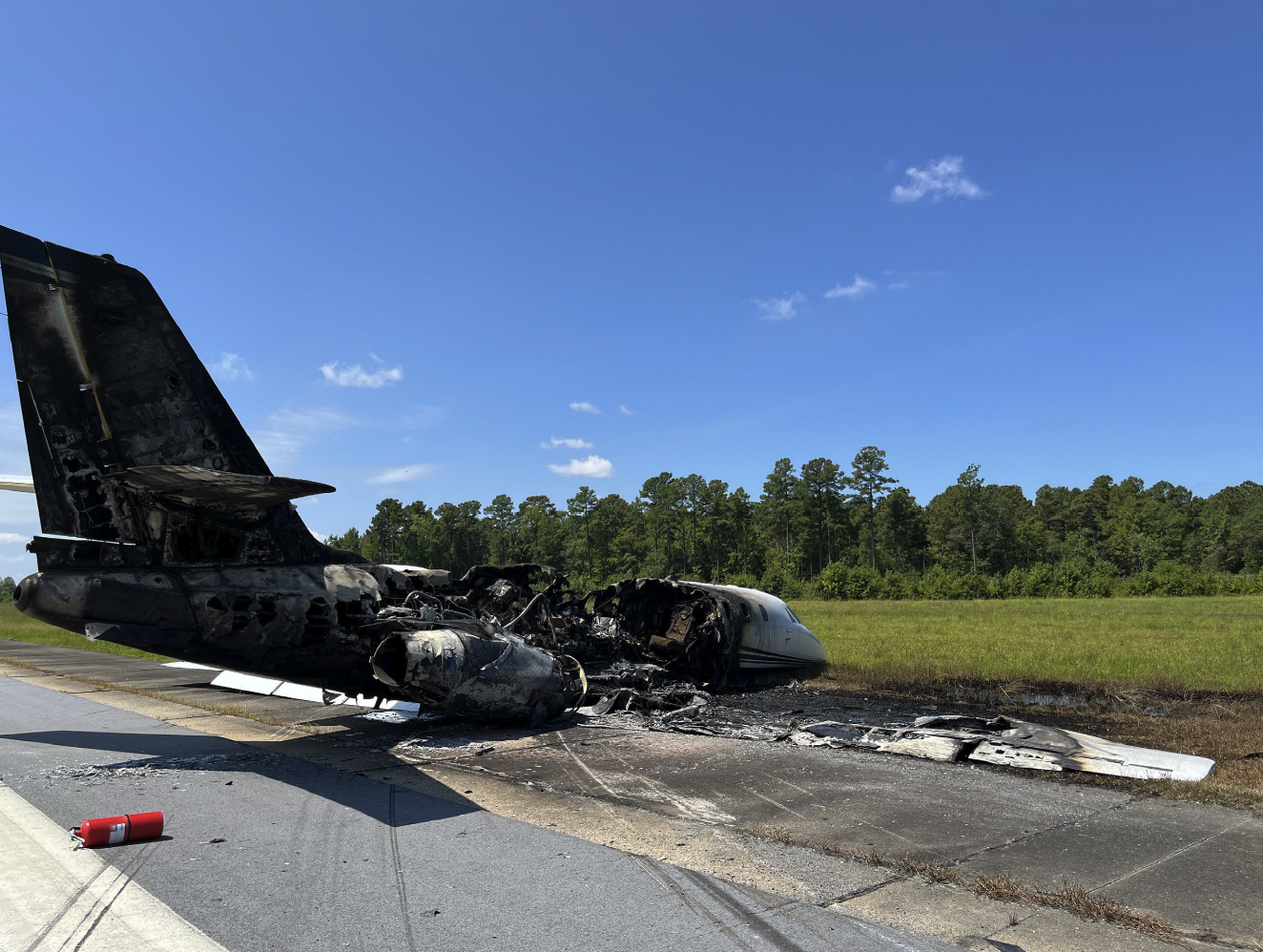
N680SA aftermath (NTSB Docket, ERA24LA351)
The aircraft had a problematic interphone system that only issued the landing gear warning horn to the captain and in at least this case, did so with a squeal. But a landing gear warning horn obviously doesn’t cause a gear up landing. The NTSB report is a scant six pages and only half of the first page is devoted to analysis. But that, it seems, was enough:
The review also revealed that during the flights on the day of the accident, the performance of Before-Starting-Engines, Engine Start, Before Taxi, Before Takeoff, Before Landing and other tasks did not comport with the manufacturer’s checklists and were sometimes performed without any verbal communication between crewmembers. The CVR recording further revealed that the captain removed his headset due to a 500Hz “squeal” that he failed to identify as the gear warning horn, and consequently missed the repeating, “too low, gear” aural warning that followed.
NTSB Aviation Investigation Final Report, NTSB ERA24LA351
The lessons here should be obvious, but in case they aren’t:
- An unexplained sound bears investigation, especially when it starts during a critical phase of flight.
- Checklists and Standard Operating Procedures exist for a reason and just because you’ve gotten away with ignoring them for years doesn’t mean you are better than them, it just means you’ve been lucky. And luck inevitably runs out.
- Even if a piece of equipment, such as a cockpit interphone system is not required for flight in a Minimum Equipment List or other regulatory relief, it might be operationally required.
- Be careful who you pick for a mentor. A 73-year-old veteran who has seen the world may be a great source of knowledge and inspiration, but if that veteran ignores everything you’ve learned thus far in your career, perhaps you should seek inspiration elsewhere.
I digress further after I’ve finished . . .
Many years ago, when I was a check airman for a Part 135 management company, we had a Part 91 crew get in trouble for an altitude clearance bust. The company negotiated with the FAA and saved the two pilots from legal action by promising to give the flight department’s entire pilot force training and check rides. I was called in to do the check rides for six pilots on three separate flights. None of the flights went well, but the first flight was with the pilots who had the altitude bust and was the most notable. I ended up failing the pilots on the ride, but for something during the approach and landing phase. What matters for this discussion happened during the initial climb.
I heard the crew explained the altitude bust as the frequency being too busy and they never heard the clearance. That leaves a lot of follow on questions, but that was their explanation. For our flight, with me in the jumpseat, I thought the two pilots were a bit lazy and not adhering to the ideals set by our Flight Operations Manual, but they hadn’t done anything unsafe until 18,000 feet.
Before I go any further, let me explain that this was on a Falcon 900, which was a nice airplane for the day. I came to this job after flying the Gulfstream GV for a living. By comparison, the Falcon felt small and noisy to me. Okay, back to our initial climb . . .
Passing 18,000 feet, both pilots reset their altimeters, turned on the cockpit speakers, and took off their headsets. I asked them why and they said it was their flight department’s Standard Operating Procedures. I reminded them that our company SOP only allowed the headsets off during oceanic flights with SELCAL in use. They said their headsets were uncomfortable and their cockpit quiet enough to make the headsets unnecessary. In the next two hours they missed two altitude clearances that I caught, still wearing my headset. They argued that ATC was required to try again and had I given them more time, they would have gotten the clearances.
I debated what to do about all this, but my hand was forced when the captain did something unsafe during the visual approach to landing. I won’t go into that here, but I will add that I also got the next two crews on safety issues. Our management company decided this flight department was better off under someone else’s care. I heard that within a year, the next management company fired all six pilots.
Aviate, Navigate, Communicate. We like to say those three words in that order as a matter of priority. But while Communicate is the third item on the list, it often is required to make the other two items possible. The captain on the accident Cessna Citation Sovereign should have placed a higher priority on having his problematic interphone system repaired. He should not have considered taking his headset off to be a complete solution to a mystery squeal. Now he has to live with the idea his long and perhaps distinguished career ended with destroying a perfectly good airplane.
The crew of the Falcon 900 in my last example considered taking their headsets off a superior solution to replacing the headsets with something more comfortable or simply accepting being uncomfortable. Now they are unemployed.
I spent the first three years of my professional pilot life strapped into an ejection seat with an oxygen mask clamped onto my face. Was it comfortable? No, but I got used to it. I spent the last three years of active flying in an airplane that could cruise all day long above 45,000 feet with a cabin pressure around 3,000 feet. Was it comfortable? Yes. No matter where your flying job sits in that continuum, you signed up to put up with the discomfort. So do that and resist the urge to take shortcuts for the sake of comfort.
References
(Source material)
Aviation Investigation Final Report, Cessna 680, N680SA, National Transportation Safety Board, ERA24LA351