We all know continuation bias when we see it in an accident report. But do we see it in ourselves?
— James Albright
Updated:
2026-11-01
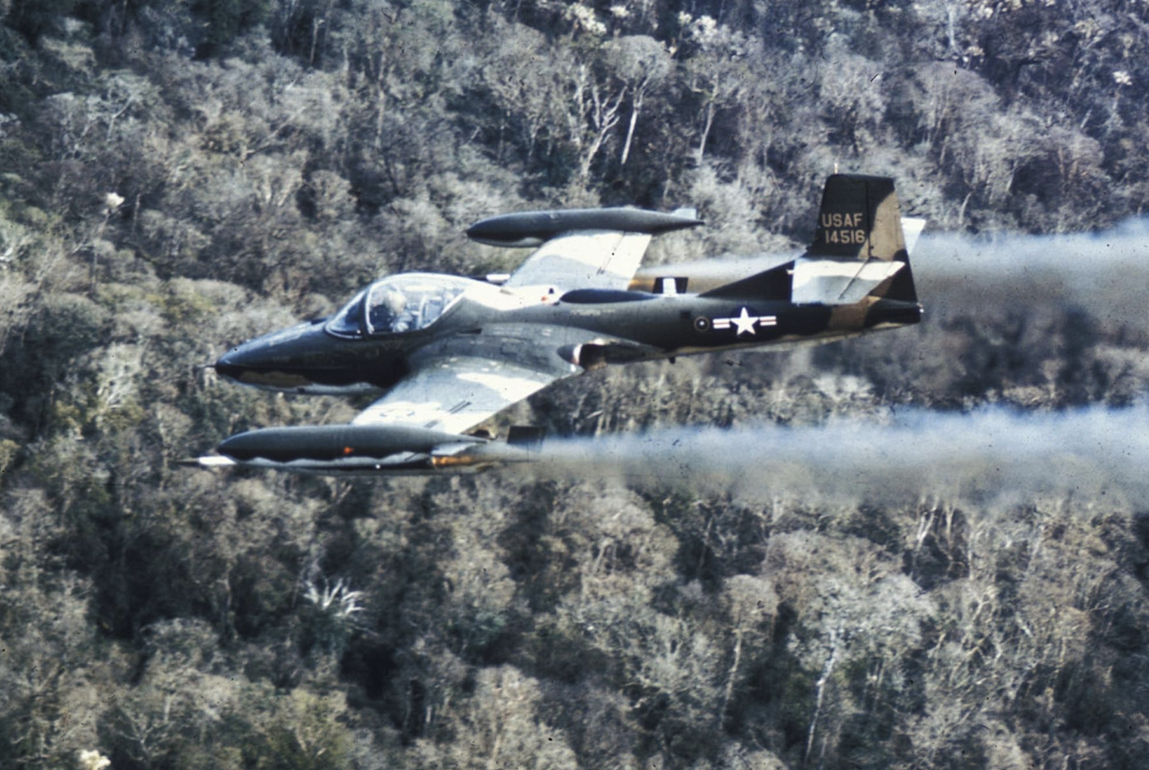
A Vietnam era A-37 on attack
For a fighter or bomber pilot, it is known as "target fixation." For a commercial pilot after a long day, it can be thought of as "get there-itis." For many of us professionals, it is simply an inner desire to get the job done. Not a bad thing, right? For that last item, sure. Except when it gets in the way of a stabilized approach. Or safely flying the airplane.
1
Just a Few Examples
Korean Air 2033, Seoul, 1994.
An expatriate captain and a Korean national first officer had difficulty communicating, the airline’s SOPs were poorly written, and the idea of a stable approach was still foreign to this airline. The pilots ended up over the runway threshold high and fast with the captain trying to land and the first officer confused about what to do. The aircraft was destroyed but there were no fatalities.
American Airlines Flight 1420, Little Rock, 1999.

N215AA, from "Pressing the Approach", pg. 28
After a long day on approach where conditions were rapidly deteriorating, the crew elected to continue even after crosswinds increased above limits. The aircraft was destroyed and 12 of the 151 persons on board were killed.
Air France Flight 358, Toronto, 2005.
The crew elected to continue the approach even after receiving reports of poor braking action and weather radar reports of heavy precipitation. The crew ignored stable approach rules after the weather pushed them above the glideslope and caused the groundspeed to increase, touching down long and departing the runway. Remarkably, everyone survived.
Asiana Airlines Flight 214, San Francisco, 2013.
The crew inadvertently disabled automatic airspeed control and failed to recognize the loss of airspeed. At 500 feet the crew elected to continue and only recognized the low airspeed and flightpath at 200 feet, by which time it was too late. The aircraft struck the seawall short of the runway.
Continuation bias isn’t limited to landing, however. A few more examples:
Air Florida Flight 90, Washington, D.C., 1982.
The crew made a series of mistakes when deicing their aircraft and then coming up with a string of ad hoc de-ice techniques that ended with the airplane in the Potomac River and 74 fatalities of 81 persons on board.
US Air Flight 5050, LaGuardia, 1989.
The crew began their takeoff with the rudder improperly trimmed. The first officer experienced increasing directional control difficulties and the captain failed to intervene until stopping on the runway was impossible. The aircraft ended up in Flushing Bay with 2 fatalities of 63 on board.
Comair Flight 5191, Lexington, 2006.
The crew taxied to the wrong runway at night and made a series of comments about how the runway didn’t seem right, such as the fact it wasn’t lit, the heading was off, and the runway was only half as wide. They can be excused for not noticing the runway was appreciably shorter, but the other cues should have been obvious. There was only one survivor of the 50 persons on board.
2
Target Fixation
We often use the term “target fixation” to describe continuation bias. The pilot actually continues to his or her target until hitting it.
F-16C, Iraq, 2006. The pilot was providing close air support northwest of Baghdad. Coalition troops were in a serious firefight, and the crew of a downed Army helicopter was in danger of being overrun. The pilot made a successful strafing pass with the F-16’s 20-mm gun. He then came around for another attack. On the second pass, he concentrated on maintaining visual identification of the moving vehicles and pressed the attack too low. He struck the ground and was killed. The Air Force Accident Investigation Board attributed the crash to “channelized attention … and subsequent target fixation.”
Target fixation appears to have entered aviation terminology during World War II fighter-bomber training, specifically to describe pilots becoming so absorbed in aiming during strafing or bombing that they failed to pull out in time. Target fixation was particularly nasty with guns. A pilot fired, watched the tracers hit, saw that they were a little short or off to one side, corrected, fired again—and meanwhile several hundred feet of recovery altitude disappeared.
A Vietnam-era fighter pilot, Retired Lieutenant Colonel George Darrough, described exactly this in an oral history preserved by the Library of Congress. (Library of Congress) Flying the Cessna A-37 Dragonfly (shown on the top of this article) normal firing range was about 3,000 feet. New pilots sometimes watched their rounds strike, corrected their aim and fired another burst instead of immediately beginning the pullout. Darrough’s lesson was essentially: fire and pull off; correct the miss on the next pass.
He makes an analogy I think is particularly good from an instructor-pilot standpoint: a beginning pilot might spend as much attention looking at the carburetor-heat control as the altimeter because he hasn’t yet learned which information is important. Darrough said combat experience produced much the same change in fighter pilots—the experienced pilot increasingly kept his head outside and scanning rather than concentrating exclusively on the mechanics of the attack.
Note: if you’ve never heard an oral history from a Vietnam Vet with experience support TIC (Troops in Contact), I highly recommend Lieutenant Colonel Darrough’s oral history. Forget about all the fighter pilot swagger, “the best of the best” Top Gun B.S., and understand this kind of flying requires the highest level of discipline and motivation. I’ve lost of few relatives and close friends with this kind of experience and regret that I didn’t press them harder to open up about their experiences. These oral histories do a great deal of good for those of us who follow in their footsteps.
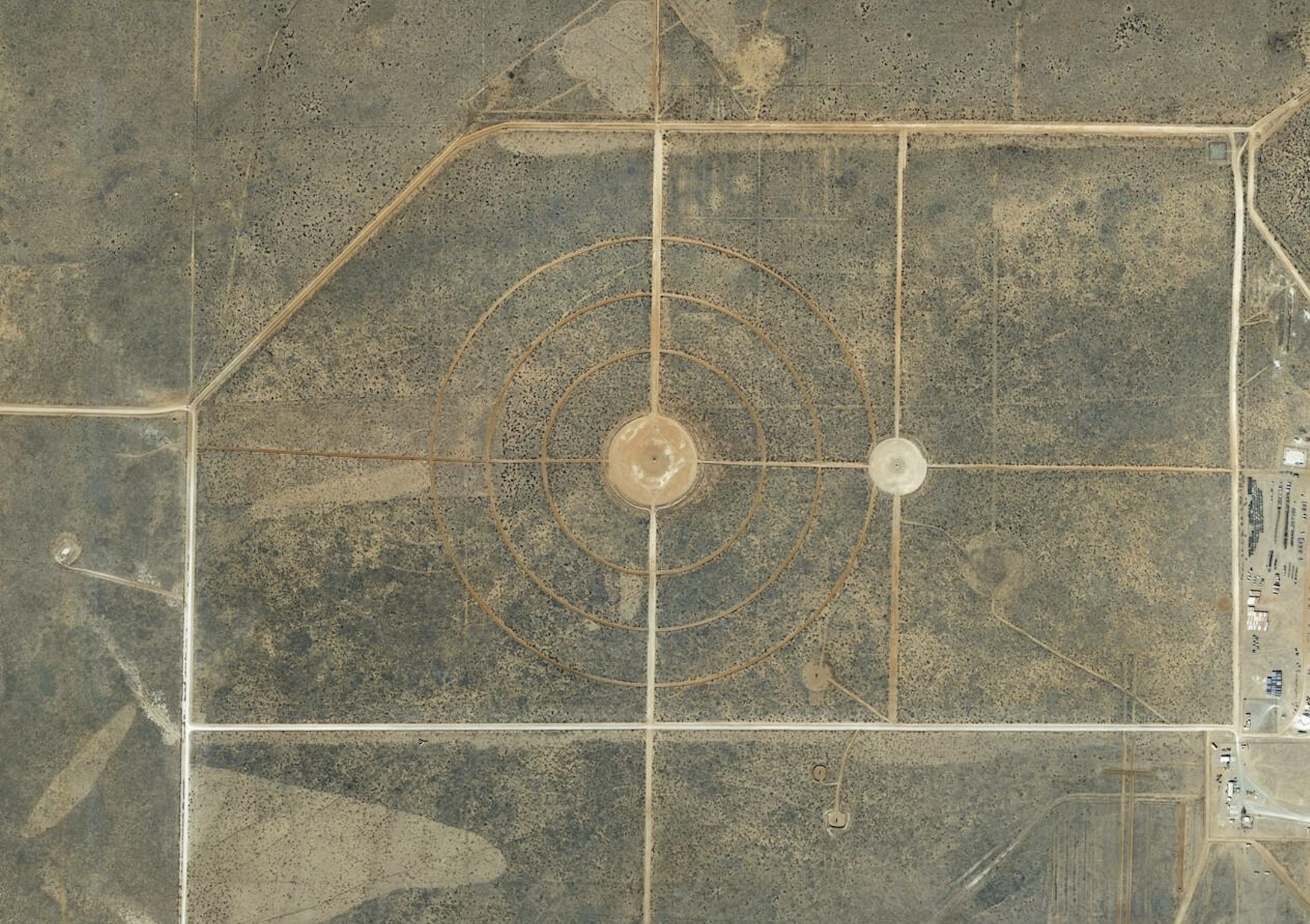
Note: We often hear fighter pilots say "shack" to denote dropping their bombs on the center of the target. I've always known this to mean a shack that is placed in the "bullseye" of the target, but never understood why someone would do that. I have found a few oral histories of World War II bomber and fighter pilots who use the terminology. Here's one of those: Edward C. Piech, Rutgers Oral History.
3
But What, Exactly, is Continuation Bias?
A few definitions, some easier to digest than others:
[Human-factors terms] The unconscious tendency to continue with the original plan despite changing conditions that warrant a new plan.
[Accident investigators terms] The need to stick with the planned flight profile when doing otherwise requires admitting the plan is no longer viable or the idea that the original plan can be salvaged more easily than making any changes.
[Fighter pilot / military pilot terms] Fixating on the target so that all other environmental factors disappear.
[Professional pilot terms] Get-there-itis.
We pilots plan things to the nth-degree and having to change the plan means we have to admit that we were either unable to fulfill the plan or that our plan wasn’t sufficiently thought out. Or, in the case of target fixation or get-there-itis, it means we lack the discipline and situational awareness to realize the goal is no longer paramount.
4
How Do We Prevent It?

Southwest 345 (NTSB Docket)
The plain and simple (and seemingly stupid) answer to continuation bias is don’t continue. But in the heat of battle, that is easier said than done. It’s been a long day, and the runway is right there, at the end of that magenta line. The target is floundering beneath the spray of your guns and yet it keeps flying. Just another two seconds! The aircraft before you landed and the aircraft after you will too. Why not you?
I think the real cause of many of these accidents is that as humans, we are accustomed to bending the rules “just a little” and getting away with it. Pressing the approach worked the hundreds of times before, why should this time be any different? The solution is found in all those accident reports if you read between the lines. Please allow me to do just that.
- The sterile cockpit
- The importance of precise language
- The stable approach
- The crew
- The lines of responsibility
- Adopt “the book” and fly by it
Most operators agree that below 10,000 feet, when not in cruise flight, the only discussion in the cockpit needs to be related to the task of flying the airplane. Many operators add anytime climbing or descending within 1,000 feet of the level off altitude. So, what is the harm of talking about the next football game or your hobbies when you are fully capable of multi-tasking?
While not a continuation bias example, the case of Corporate Airlines Flight 5966 in 2004 provides a remarkable example where not following a sterile cockpit can have deadly consequences. Early in the flight the pilots were disparaging “by the book” pilots, saying “gotta have fun.” The first officer agreed, “that’s the truth man, gotta have the fun.” The NTSB noted that compliance with the sterile cockpit rule would have increased their focus on SOPs and professionalism. The pilots failed to make several mandatory callouts, any one of which could have changed the outcome.
My biggest problem with sterile cockpit violations can be thought of as the proverbial “slippery slope.” Ignoring sterile cockpit rules is a breach of cockpit discipline. You may think having a relaxed climate in the cockpit is important and maybe it is. But there are times we shouldn’t be relaxing our vigilance.
A Boeing 747 flight engineer I used to fly with in the Air Force was hired by Japan Airlines as a professional engineer. He told me that everything he was allowed to say in the cockpit was scripted in the manual. A fire light, for example, required him to tell the captain, “Fire Light Number Three.” The captain also had precise responses, which included the question, “How fire?” To this the engineer had only two possible responses: “Still fire” or “No fire.”
At the time we laughed about this, but there are countless examples where cockpit confusion stemmed from language differences. In the case of Korean Air 2033, “windshield wiper on” generated the response, “windshear?”
Even those of us who speak the same language have issues with jargon. I used to fly with a pilot who would say, “light the fires” instead of “engine start checklist.” Another would say “time for me to have some fun” instead of “autopilot disengage.”
In the case of US Air 5050, for example, after experiencing directional control problems during a first officer takeoff, the captain said, “got the steering,” meaning the first officer had the steering. The first officer heard it as the captain had the steering and relaxed his rudder inputs. Instead of saying “abort,” the captain said, “Let’s take it back then.”
How does a stable approach prevent continuation bias? Strictly speaking, it doesn’t. But the willingness to go around from an unstable approach is a sure way to combat continuation bias.
Southwest Airlines has an entire catalog of unstable approach accidents that should have resulted in go arounds, but didn’t. It is easy to Monday Morning Quarterback these accidents, but it is a valuable exercise. Place yourself in these situations and imagine at what point you would have “enough of this!” and gone around:
Southwest Airlines Flight 345 was making its approach to LaGuardia on a day with good weather, light winds, and no compelling reason to go around until at 600 feet, 400 feet below their stable approach height, they discovered that they had forgotten the last notch of flaps. The first officer was flying and the captain simply selected the flaps. At 200 feet they were above glide slope. There were several times that a go around was called for, but they pressed on to the point where the captain took the airplane at just 27 feet and promptly crashed the airplane into the runway nose first. They are lucky there were no fatalities, other than the airplane, which was damaged beyond repair.
Southwest Airlines Flight 1455 has the honor of being the textbook case of a slam dunk approach leading to countless opportunities to go around but instead resulted in another textbook lesson, this one in continuation bias. The crew ended up incredibly high, incredibly fast, and landed incredibly long. It is a miracle that nobody was killed, though the airplane was destroyed.
Southwest Airlines Flight 4069 was heading for Will Rogers World Airport and descended to just 525 feet above the ground, over 9 miles from the runway, prompting the controller to say, “Southwest 4069, low altitude alert. You good out there?”
Southwest Airlines Flight 425 was making a visual approach to Tampa, Florida despite a few clouds between them and the runway. They dropped to below 200 feet over the water, still 4 miles out. It appears they were lined up on the Tampa Bay Bridge, which has a maximum height of 180 feet. The airplane got down to 150 feet.
Some pilots loathe Standard Operating Procedures (SOPs) because it assaults their sense of having good judgement. As some pilots in one of my Air Force squadrons would preach, SOPs are meant for lesser pilots, those who don’t have our experience and ability. What these pilots miss is that no one pilot can have greater experience and ability than the collective experience and ability of all those who came before us.
In the case of American Airlines 1420, for example, the originally scheduled takeoff at 2100 was delayed because the aircraft they were to fly was delayed by weather. The crew informed gate agents that they would have to depart by 2316 because of duty time limits. They were given a new aircraft and departed over 2 hours late. Fourteen minutes later, a dispatcher sent a message saying the weather could be a factor and suggested the crew expedite the arrival to beat the thunderstorms if possible. From that point the crew was offered a visual, declined because they couldn’t make out the airport, and later accepted a short approach. At many points from that point on, the captain indicated he didn’t see the runway though the first officer did. The captain said to the first officer, “I still don’t see it . . . just vector me.” In the end, they overlooked their crosswind limits, visibility minimums, and stable approach criteria.
A disciplined pilot has the ability to question his or her own judgement and realize that in the heat of battle, they might be wrong and the wise course is to follow SOP.
The captain has a role to play, no doubt about it. But what about the rest of the crew? A captain who ignores the crew is depriving him or herself of a valuable check against continuation bias.
The airlines of Korea (Asiana Airlines and Korean Air Lines, later rebranded Korean Air) have a long list of accidents where the captain made a faulty decision and the crew refused to challenge him. Asiana 214 is just one example of many. After that accident, an American expat did an excellent job analyzing the problem, (see “An Ex-Pats Opinion” in the article Asiana Airlines 214, and blames “3000 years of culture.” I argue that the Japanese had a similar culture but fixed their problem with a strict adherence to SOP.
Accident investigators like to talk about James Reason’s “Swiss Cheese Model” of accident causation in his 1990 book “Human Error.” The central idea is that aviation has several defensive layers, each with weaknesses of “holes.” When the holes in each layer line up, you have accidents. Our SOPs are designed to prevent this from happening. An SOP (example: approach briefing) doesn’t prevent the accident but combined with other SOPs (example: callouts) can.
Some pilots look at others who “fly by the book” as pilots lacking talent – the so-called “right stuff” – or the situational awareness to make decisions quickly and accurately. It could be that they’ve experienced manuals and SOPs that were poorly written, or it could be that they’ve never been in an environment where following SOPs was emphasized. In either case, these pilots should look at the mountain of evidence in the NTSB accident docket as a reason to give their SOPs a second chance. A faulty SOP can be corrected. An accident caused by ignoring SOPs can’t.